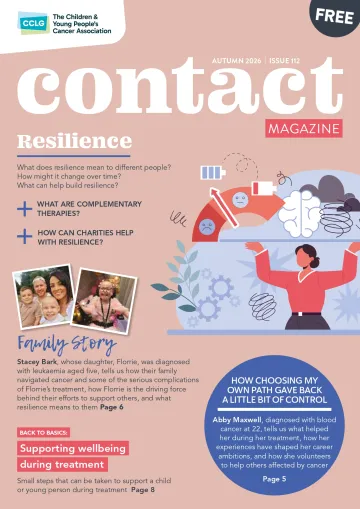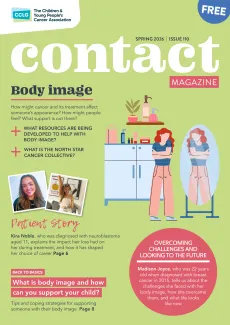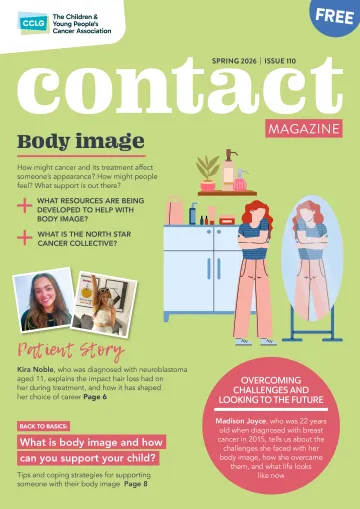
Body image

Changes in appearance can be distressing and tough to deal with for any child or young person, let alone one diagnosed with cancer. Already navigating identity and self-esteem, the effects of cancer and its treatment, both short- and long-term, such as hair loss, weight gain or scarring, can add to this pressure.

Download this issue
  • How might cancer and its treatment affect someone’s appearance? How might people feel? What support is out there?

  • What resources are being developed to help with body image?

  • What is the North Star Cancer Collective?

In this edition, we explore how children or young people might feel about their body image when confronted with changes to their appearance, as well as what might help them. We hear how parents and caregivers can play a key role by initiating honest conversations, providing reassurance, and celebrating strengths beyond appearance. Healthcare teams and charities can also help by introducing support like therapy or counselling, peer support groups, and practical tips for managing visible side effects.


As always, we’re grateful to all those who have shared their experiences in this edition. Sharing what helped them navigate their own challenges will help other people facing similar issues feel less alone - and, hopefully, in a position to reach out for help when they need it.
Articles from this issue

Don’t wait to reach out for help

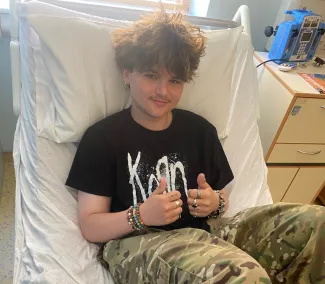
Jude Solley was diagnosed with mixed-phenotype acute leukaemia (MPAL) in 2021 aged 16. Now, 21, he explains how this caused him to struggle with body image issues, why he decided to reach out for help, and why he advises others to do the same as soon as possible.

What is body image and how can you support your child?

Dr Rebecca Mulholland is Senior Clinical Psychologist at Sheffield Children’s Hospital. Here, she explains how a child or young person might feel about changes to their appearance due to treatment, and how you can support them.

Subscribe to our free quarterly magazine for families of children and young people with cancer

Subscribe to receive our latest quarterly Contact Magazine.