Q: What does your role involve?
A: I work with 13–18-year-olds on the teenage haematology and oncology ward, helping them be teenagers, not just patients. Every day is different: sometimes we’re doing arts and crafts or having a games night, and sometimes it’s simply me sitting with them while they talk about school, friendships, fears, or how treatment is affecting them. I’m not medical, so I never deliver bad news, which helps them feel like they have a safe space. I try to give them control over what we do, because so much of their lives feels out of their hands.
I also link them up with physios, dieticians, talking therapy, and other teams to make sure they’re getting the support they need. Whether it’s creating routines or just being there to chat, my goal is to help them feel like themselves and keep a bit of normal teenage life alive, even in hospital.
Q: How do you help children and young people with body image?
A: When it comes to body image, I never force the conversation, it must come from them. I make space for it, but they choose when they’re ready to talk. When they do, I let them feel whatever they’re feeling: anger, fear, embarrassment. I remind them that their body will keep changing throughout treatment, and while it might not go back to exactly how it was, this stage is temporary.
They have full ownership over the conversation, and I’m there to support, not to lead. I also signpost them to things that can help… wigs, skincare workshops, talking therapy, and other services that make them feel a bit more like themselves.
Q: What’s the proudest moment of your career so far?
A: Helping Candlelighters run our first Teenage and Young Adult Cancer Awareness Month. We created a space for young people to share their stories and advocate for themselves and seeing them feel proud and relieved to have their voices heard was incredible.
Q: What’s the most rewarding aspect of your job?
A: Firstly, it’s seeing young people regain a sense of normality, whatever that looks like for them. Being able to witness their progress, the moments when they feel more like themselves again, is incredibly rewarding. Secondly, it’s seeing a young person advocate for themselves. I love watching them ask questions, understand their treatment, and take ownership of what’s happening to their body. It gives them back a bit of control and really strengthens their relationship with the medical team, too.
Q: What does your job mean to you?
A: It’s hard to put into words. This job feels like a calling, I genuinely feel like I was meant to do it. Knowing I can make even a small difference is what keeps me going. Every day I get to stand beside them, support them, and be part of their world during such a difficult time. It means everything to me.
Q: Do you have a message for young people and their families affected by cancer?
A: For young people: advocate for yourself. Ask questions. Speak up. And remember, you have cancer, but it’s not who you are. It doesn’t define you. You’re still you, with your own personality and identity.
For families: don’t be afraid to talk about what’s going on. Connecting with other families can make a huge difference. And be honest with your child, they can usually sense when something’s being kept from them, and honesty helps them feel included and supported.
Q: How can families and young people find out about accessing further support?
A: From a Candlelighters perspective, they can access our free talking therapy at any point in their journey. If they ever feel they need emotional support, they can just reach out to any of the team, and we’ll help get them connected.
For those outside Yorkshire, there are lots of ways to find support. You can check local charities, speak to your GP, social worker, clinical nurse specialist, or consultant. They’ll know what services are available nearby and can point you in the right direction. The main thing is that you don’t let anything hold you back from getting the support you need.
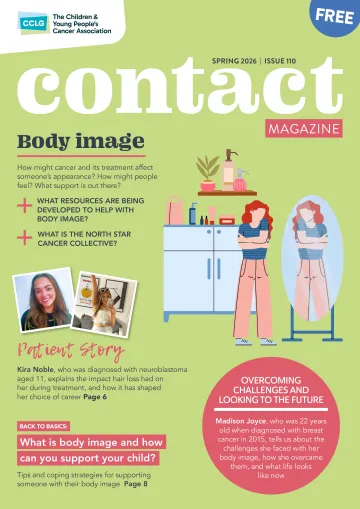
From Contact magazine issue 110 | Spring 2026