Teenage and Young Adult Cancer Awareness Month

Every April, Teenage and Young Adult Cancer Awareness Month is held to highlight the challenges faced by young people aged 13 to 24 navigating a cancer diagnosis.

What is Teenage and Young Adult Cancer Awareness Month?

Every year, around 2,300 teenagers and young adults are diagnosed with cancer in the UK. Teenage and Young Adult Cancer Awareness Month (TYACAM) takes place to highlight the challenges faced by young people aged 15 to 24 navigating a cancer diagnosis. Over 20 charities across the UK come together to raise awareness of signs and symptoms in teenagers and young adults (TYA) and the issues they face, and most importantly, to support young people to share their experiences and ensure their voices are heard. 

The theme for Teenage and Young Adult Cancer Awareness Month 2027 is yet to be confirmed.

When is Teenage and Young Adult Cancer Awareness Month?

Teenage and Young Adult Cancer Awareness Month takes place every April. This year, it will run from 1-30 April 2027.
Teenage and Young Adult Cancer Stories

Cancer stories

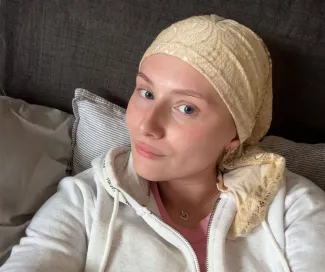
Alex’s story

Alex Witton was diagnosed with Hodgkin lymphoma in May 2025 at 22 years old. This Teenage and Young Adult Cancer Awareness Month (TYACAM), she shares her story.

Cancer stories

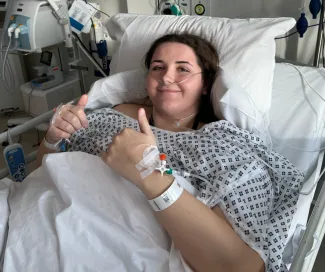
Layla's story

Layla Jane Bartlett was diagnosed with ovarian cancer in January 2025 when she was 22 years old.

Cancer stories

Daniella's story

Daniella Capitas Webster was diagnosed with mucinous ovarian cancer, when she was 22 years old. Here, she tells us why she wants to encourage others to advocate for themselves.

How is childhood cancer different to adult cancer?

Childhood cancer is different from adult cancer in many ways. It is much less common, and the types of cancer children develop often affect the blood, brain, spinal cord, or lymphatic system.  Cancer goes on to impact their mental health, relationships, body image, fertility, and education and work, so treatment options need to consider a child’s growth, development, and long-term health. Childhood cancer symptoms can often look like common childhood illnesses; it’s important to get them checked if they are persistent, progressive, or occur in clusters. 

Indian girl with white blouse and shoulder length black hair smiling and talking to another Indian girl

Create brighter tomorrows for young people with cancer this September

By supporting us, you’re driving life-changing progress and making a real difference to young lives.
Donate now

Get involved with Teenage and Young Adult Cancer Awareness Month

Order pin badges

Wear a pin badge to support Teenage and Young Adult Cancer Awareness Month.

Order a badge box

Order a free box of pin badges to sell at work, home or in your community.

Social media toolkit

A toolkit to help support Teenage and Young Adult Cancer Awareness Month on social media.

What support services are available for teenage and young person cancer patients in the UK?

In the UK, teenagers and young adults with cancer can access support through their NHS cancer team, including Clinical Nurse Specialists, psychologists, social workers and other professionals. We, CCLG: The Children & Young People’s Cancer Association, support children, teenagers and young adults with cancer by providing trusted information, factsheets and digital downloads to help patients and families understand and manage the challenges of diagnosis and treatment.

 We also fund research into better treatments and care, work with healthcare professionals, and push for improvements in childhood cancer diagnosis through our Child Cancer Smart campaign as well as other services. Our Engage platform is a national platform to support parents, carers, patients, survivors and family members to get involved in advocacy. Through education, connection and mentorship, it aims to help people build knowledge, confidence, and recognise the value of their lived experience. 

Other charities provide specialist hospital units, expert nurses, youth support coordinators, information and opportunities to connect with other young people aged 13–24, as well as practical, emotional and financial support.

Read more about teenage and young adult cancer

Types of cancer in children and young people

Although there are over 200 different types of cancer, certain cancers are more likely to affect children and young people. Understanding more about the type of cancer and the treatments that may be used can often help you to cope.

I am worried I have cancer

Many of the common symptoms of cancer are similar to other, often less-serious illnesses. But being aware of the signs and symptoms of cancer is important, as it can help with earlier diagnosis and treatment.