This collaboration is led by five charities: Alike, CCLG: The Children & Young People’s Cancer Association, the Ellen MacArthur Cancer Trust, Shine Cancer Support and Young Lives vs Cancer.

Community Engagement Practitioner at Young Lives vs Cancer, supporting the setup and development of the Lived Experience Advisory and Action Group for the North Star Cancer Collective, using prior lived experience
How did it come about and why is it needed?
In 2022, four children and young people’s cancer charities commissioned independent research to better understand the needs, outcomes and experiences of young people with cancer and their families. This research revealed gaps and inequities that affect every part of a young person’s life, often long after treatment ends, leading to the creation of a shared ‘North Star Vision’ – a unifying ambition for what cancer care should look like for every child or young person and their families.
The North Star Cancer Collective brings this vision to life, working together to shape a future where every child, young person and family affected by cancer receives the right support during treatment and beyond.
What does it hope to achieve?
The North Star Cancer Collective is not a frontline service. Instead, it creates the conditions where evidence, lived experience, innovation and influence come together. Its work doesn’t replace what individual organisations do. Instead, it makes those efforts add up to more. Its value is in convening and connecting. Together, we aim to transform the cancer experience for children and young people by:
- prioritising, designing, testing and scaling solutions that improve the psychosocial experience of cancer care for children and young people
- driving systemic change in cancer care and support
- embedding lived experience into decision-making
- creating a unified voice to influence policy and practice
Ultimately, the North Star Cancer Collective seeks to ensure that every child, young person and family receives the best possible care and support throughout their cancer journey.
What are its key focus areas?
The initial area of focus for the North Star Cancer Collective is to strengthen the mental health of children and young people with cancer, and their families – within and beyond treatment.
We believe that lasting change starts with learning. That’s why we’re testing new ideas and approaches, grounded in evidence and lived experience, to understand what works best for children, young people and families affected by cancer.
Our test-and-learn projects are small-scale initiatives designed to explore solutions to the biggest challenges identified in our research. Each project answers critical questions, helping us to understand how we might scale impact across the system.
When can we expect results?
Change takes time, but progress is already underway. We have recruited a Clinical Advisory Group and a Lived Experience Advisory and Action Group and are now working on embedding our test-and-learn projects. While some improvements will be incremental, the long-term goal is systemic change – ensuring that the North Star Vision becomes the standard for cancer care for children, young people and their families across the UK.
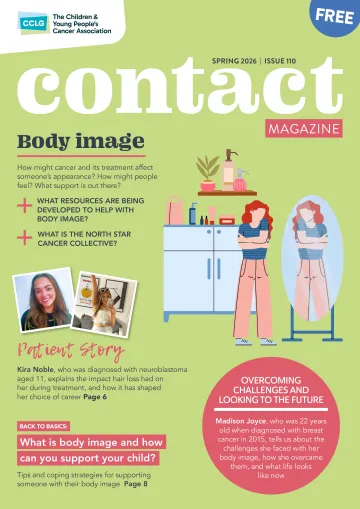
From Contact magazine issue 110 | Spring 2026