
This September, for Childhood Cancer Awareness Month, we are celebrating how the voices of those with lived experience can shape childhood cancer research, support, and policy through patient and public involvement (PPI).
A few years ago, CCLG and The Little Princess Trust partnered with the James Lind Alliance (JLA) on a Priority Setting Partnership (PSP) to identify the childhood cancer research questions that are most in need of answering. Anna Watkins, whose daughter was diagnosed with acute lymphoblastic leukaemia, was one of the many parents and survivors whose experiences helped shape the top ten research priorities in childhood cancer research.
After experiencing the importance of PPI first-hand, she now works in a charity, helping people get involved with research. I spoke to Anna to find out more about her experiences.
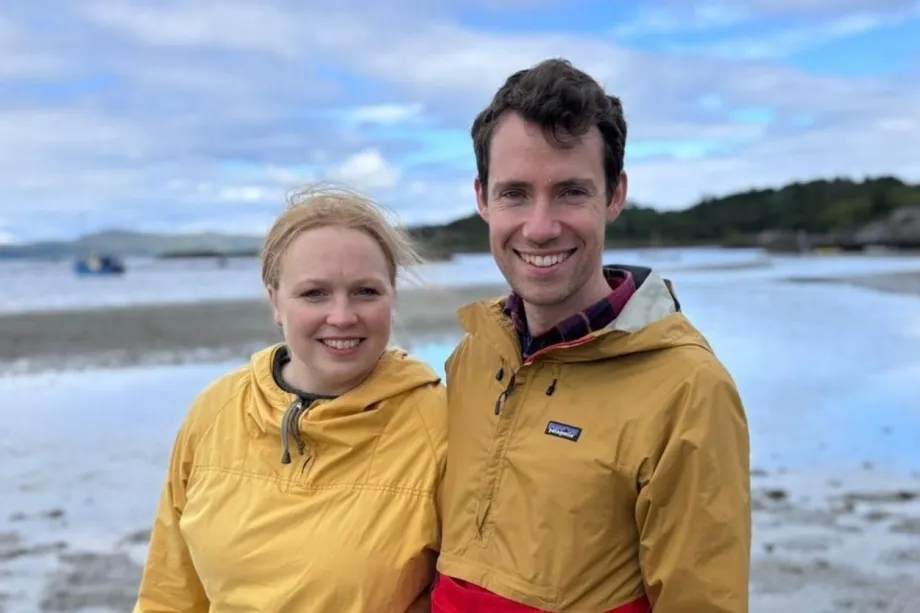
Anna and her husband, Simon.
Are you comfortable telling me a bit about your experience of childhood cancer?
My daughter was just over two years old when she was diagnosed with acute lymphoblastic leukaemia in 2020. I suppose looking back, she'd had a couple of months of symptoms and we had gone to A&E a couple of times when she suddenly stopped walking, and we were told it was just a sprain.
What actually led to the diagnosis was that she was having petechiae (tiny, pinpoint red, purple, or brown spots). I didn't know that's what it was at the time, I just knew she had a rash and a slight fever. I later found out that there were lots of other symptoms as well - she was incredibly pale, had a very high heart rate and was covered in other bruises. We got a GP appointment and thankfully they told us to go to A&E. When they saw her there, she was diagnosed within a matter of hours.
How is she doing now?
In December, it will be four years since treatment finished. She's doing really well, and she's in Year Four now at school. A few days after being diagnosed, the hospital psychologist said that she wouldn't remember any of it. I remember thinking that you can't possibly know that. I don't believe you. But actually, within two years of being off treatment, she had more or less forgotten everything. She's pretty remarkable.
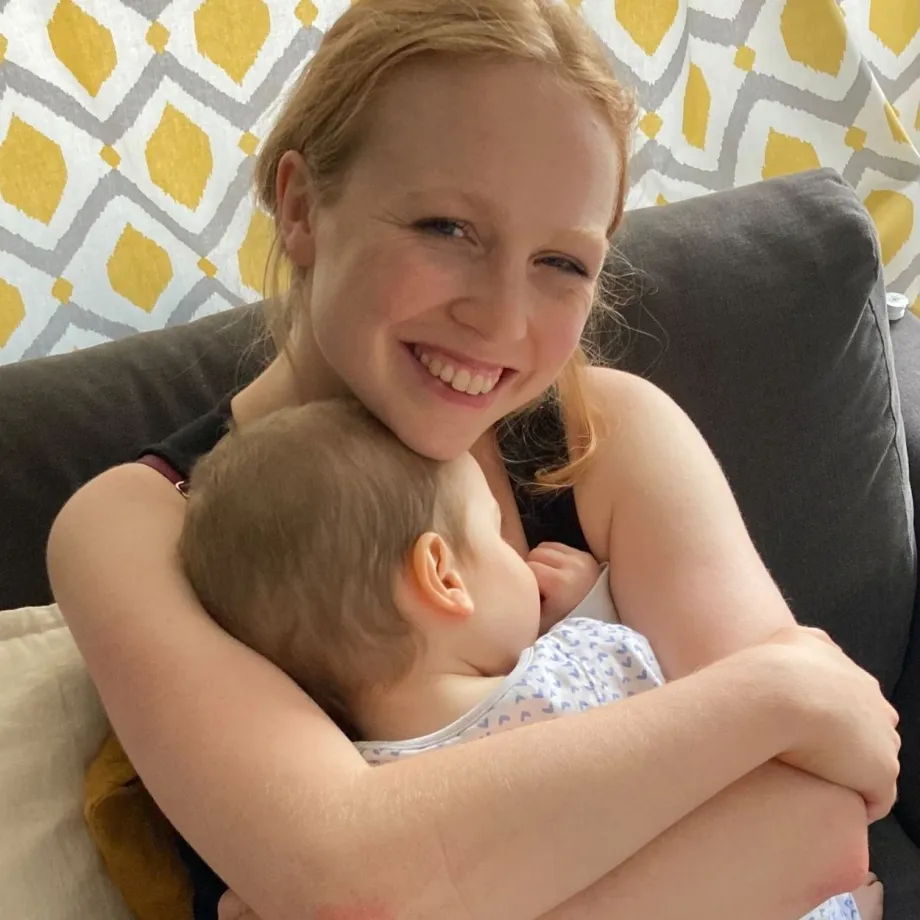
Anna with her daughter during treatment.
It’s a bit different for parents I imagine?
We'll never forget it. Another mum said to me though, halfway through treatment, that there would be a day, eventually, that I wouldn’t even think about cancer. I didn't believe her. I can't quite pinpoint when that day was for me, but she was right. There will come a day when your child is off treatment and you will have a whole day, maybe even longer, without ever thinking about cancer.
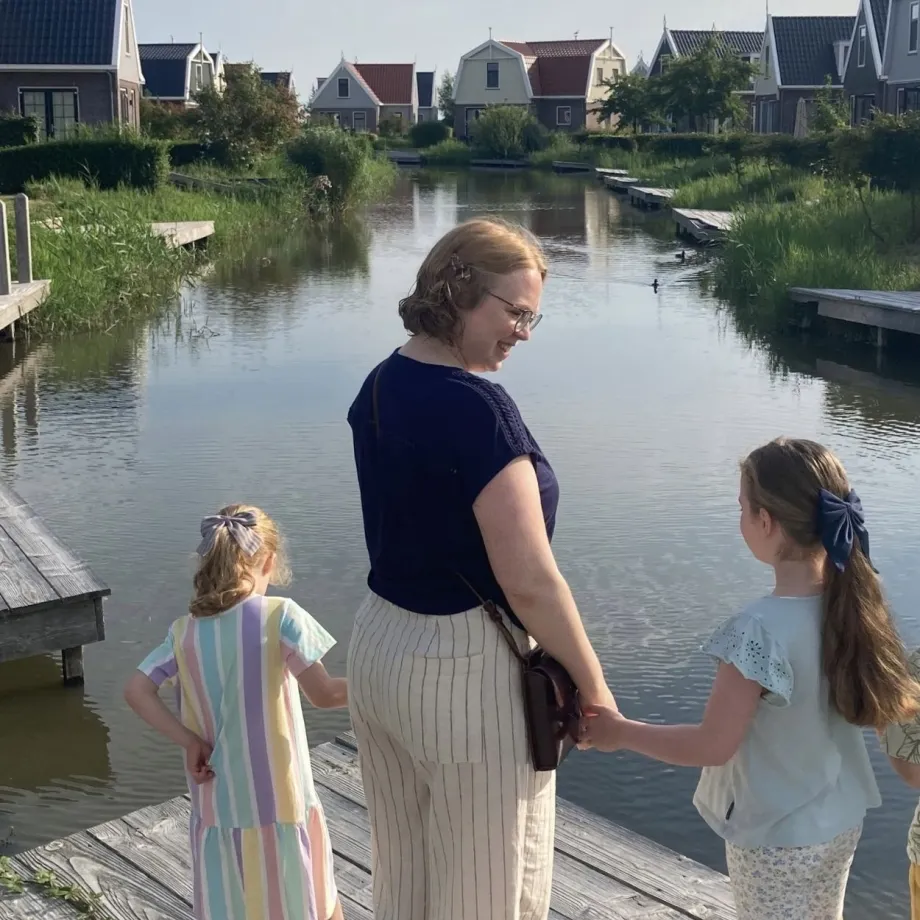
Anna with her two daughters now.
When you're in the thick of it, that's really hard to believe. Ironically, it's one of the reasons I volunteer for research and patient and public involvement (PPI). I do still want the opportunity to talk about it sometimes, because I don’t want to completely forget about it.
What’s it like taking part in research as a parent?
The first PPI I did was the children's cancer Priority Setting Partnership, when my daughter was in treatment. I'd say that PPI brings different things to different people. Sometimes it's beneficial because you can see how your experiences are being used to make improvements, so that hopefully other children do not have to go through what your child experienced. Or it can be really cathartic to talk to a group of people who just get it in a way that maybe your family and friends don’t.
Some people might not want to talk about or think about cancer ever again - and that's okay too.
Can you tell me a little bit about what PPI can achieve?
I would say PPI is key to doing research well and ethically. It gives people with lived experience the chance to shape research projects and services.
I've seen PPI change how studies are designed, for example changing the way a clinical trial is set up so it's easier for people to take part. I also see how it improves communication, like making sure research summaries are written well and cover all the right information in an understandable way.
You mentioned that the first thing you got involved with was the Priority Setting Partnership – what was that like?
As my daughter was diagnosed during COVID, Facebook support groups became a huge lifeline for me. When I joined the CCLG Parents and carers of children and young people with cancer group, I saw an advert about helping with the Priority Setting Partnership.
I missed the first couple of meetings, so it felt a bit hard to work out what was going on to start with. But I quickly saw how important the voices of parents, children and families were in the process, and that was really encouraging. The way the meetings were chaired always made sure that the lived experience representatives in the room had the opportunity to speak and ask questions.
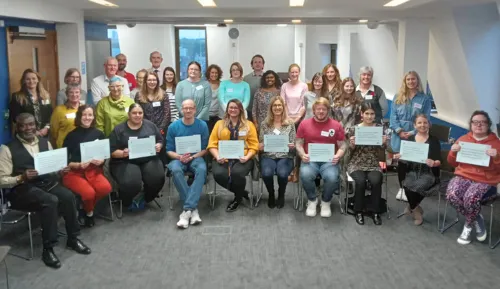
Participants at the final workshop for the Priority Setting Partnership.
There was also a children's workshop, and we made the decision after that to prioritise the research questions suggested by the children from that. It was just another example of how core children and young people, and families, were to the whole priority setting process.
- Can we find effective and kinder treatments for children with cancer, including relapsed cancer?
- Why do children develop cancer and could it be prevented?
- Are the psychological, practical, and financial support needs of children with cancer, survivors, and their families being met during treatment and beyond? How can access to this support be improved and what further support would they like?
- How can we speed up the process of getting diagnosed and starting treatment in the right place?
- Why do children relapse, how can it be prevented, and what are the best ways to identify relapse earlier?
- How can we make being in hospital a better experience for children and young people?
- What are the best ways to ensure children and families get and understand the information they need, in order to make informed decisions, around the time of diagnosis, during treatment, at the end of treatment and after treatment has finished?
- What impact does cancer and treatment have on the lives of children and families after treatment, and in the long-term; what are the best ways to help them to overcome these impacts to thrive and not just survive?
- How can we make more accessible treatments that are closer to home, in shared care hospitals?
- What is the relationship between chronic fatigue syndrome, fibromyalgia, chronic pain and treatment for childhood cancer?
What do you want to see next, now that the project is finished?
I think that the priorities are something that should be returned to, time and time again – a living, breathing set of priorities. Childhood cancer research funders should look at each application and ask whether it addresses one of the key research questions. And if not, they should be able to justify why it needs funding. Hopefully it means everything that's funded is another small step forward.
Research has now shown that children’s top priority, around making being in hospital a better experience, hasn’t received any funding since the Priority Setting Partnership. How do you feel about that?
I'm glad that CCLG are keeping track of it and paying attention to what is being funded. It could be that researchers want to study this, but there isn't an appropriate place to go for funding. I think it might be an interesting challenge for funders, to look at how funding calls are designed and what types of work are prioritised.
The hospital experience might seem like a short-term problem, but I think it is something that has much longer-lasting impacts. I've heard from other parents about how their child is battling with health anxiety, even though they're many years out of treatment. It’s a complicated issue, but I do think the hospital experience is going to be feeding into that.
We need to make sure that the hospital experience isn't causing harm to children or families that will then ricochet throughout their lives.
Do you have any advice for researchers wanting to do more meaningful PPI work?
I think just that it’s really worth starting. It can seem a bit overwhelming, particularly for lab-based researchers or those early in their careers. There are a lot of people who are open to talking about their experiences, if they can see how it could make a difference. My advice would be to just start having conversations and see where they lead. Always focus on the purpose and keep sight of why you're doing it, but you don't need to know exactly how people will be involved in your project before you get started.
Anna has asked that we do not share her daughters name, to maintain her privacy. We'd love to hear what you thought about this blog - please share your feedback here!

Ellie Ellicott is CCLG’s Research Communication Executive.
She is using her lifelong fascination with science to share the world of childhood cancer research with CCLG’s fantastic supporters. You can find Ellie on X: @EllieW_CCLG


