
Everyone knows some things require preparation. Planning to run a marathon? You’d probably start with a Couch to 5K. Thinking about climbing Mount Everest? You’d need a lot more training than a stroll in the Peak District.
We know our bodies can withstand a lot, especially if we prepare them properly. So, wouldn’t it make sense if there was a way to prepare for treatments like bone marrow transplants, which put a huge strain on the body?
Bone marrow transplants, also known as haematopoietic stem cell transplants (HSCT), can be used to treat some childhood blood cancers. There are a few different types, depending on whether the stem cells being used have been donated from another person or from the patient, but they all follow roughly the same process.
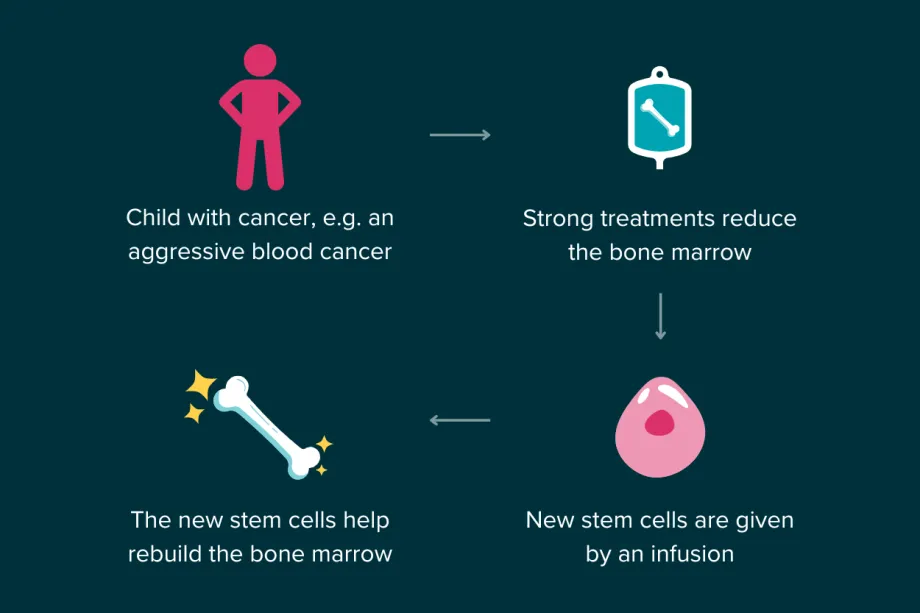
First, the patient is given very high doses of chemotherapy, and sometimes radiotherapy, which can be extremely hard on the body. This aims to kill any lingering cancer cells, but it also kills important cells in the patient’s bone marrow.
The bone marrow is a really important part of your immune system, because it makes the immune cells that fight infections. This means that patients receiving these high-dose treatments have to be isolated to protect them from any bugs. Bone marrow also produces the red blood cells which carry oxygen around your body, so patients often also need blood transfusions to help keep their blood cell counts stable.
After the high-dose treatments, the patient is then given an infusion of new healthy stem cells to replenish their bone marrow. It can take weeks until the new bone marrow is effective at producing the right levels of blood and immune cells, so this involves a long hospital stay to keep patients safe from outside infections.
As you can imagine, this treatment puts a huge amount of stress on the body. So, how could we help children prepare for it?
What does the research say?
The proper word for programmes designed to improve a patient’s health before treatments like HSCT is ‘prehabilitation’. This covers everything from special diets and exercise plans to mental health support.
Advanced Physiotherapist at Sheffield Children's NHS Foundation Trust, Debbie Rowley found lots of research about prehabilitation programmes for adults, usually around physical activity. However, there wasn’t anywhere near as much research into prehabilitation for children.
Debbi Rowley
In her CCLG-funded research project, which began in 2024, Debbi set out to find out more.
“The first thing I wanted to find out,” she said, “was whether these kind of interventions or treatments were already used for children. I looked at research from across the world, but there just isn't much out there at the minute.
It's not as though there is a gap in the UK – prehabilitation for children undergoing bone marrow transplants just isn’t happening anywhere yet.
Her review of the research showed that better strength, walking ability, and a healthier weight before HSCT were linked to better recovery for children and young people after a bone marrow transplant.
Should hospitals offer prehabilitation?
Debbi’s research found just nine papers on prehabilitation for children and young people before HSCT. Because most of the research didn’t compare whether children recovered better with prehabilitation or without it, it’s hard to say that physical health actively improved recovery. So, Debbi wanted to talk to healthcare professionals in the UK to see what they thought.
Many of the healthcare professionals she surveyed were already assessing their patients’ physical health before HSCTs, and welcomed the idea of anything that would help their patients recover better.
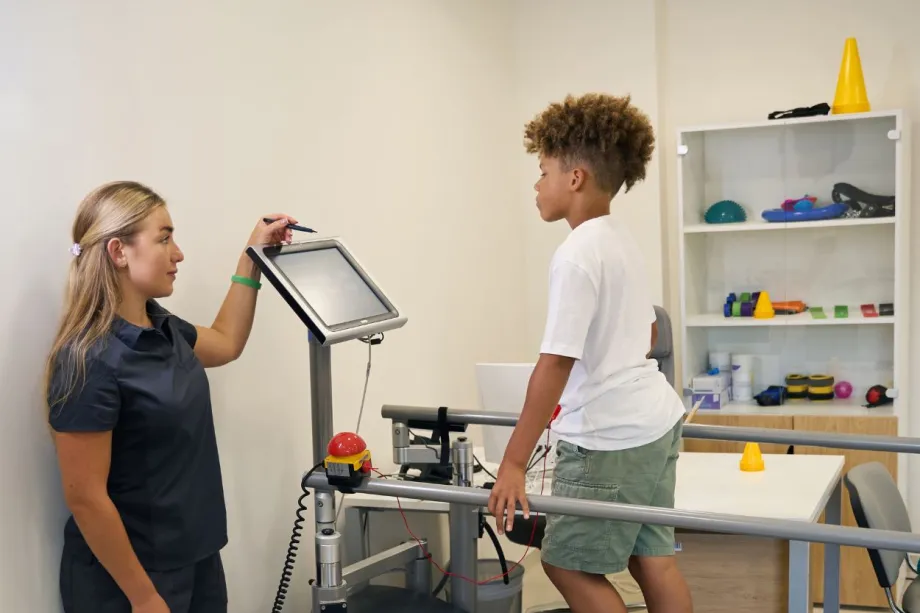
She also spoke to eight families to see whether they liked the idea of prehabilitation – and what challenges it might bring for them while already juggling day to day life and caring for a sick child.
Debbi said:
It was really interesting talking to the families to find out what their priorities were in the few weeks that they had before the transplant. Although as healthcare professionals, we probably feel that there is an opportunity, we need to make sure that it is the right thing for families at that point.
Unlike adult prehabilitation programmes, which tend to be one size fits all, the families emphasised the importance of tailoring the recommendations to each child – it wouldn’t make sense, for example, to give the same programme to a five-year-old and to a teenager, or to prescribe lots of physical activity to a patient who is severely ill. Children with cancer can vary hugely in age, diagnosis and physical ability, so would need a lot more customisation.
“The other thing that came through very strongly from families,” added Debbi, “was that they're going to be spending a long time in hospital when they come in for their transplant.
“They don't want to have to come into hospital for more appointments, so these interventions would need to be based close to or at home.”
Overall though, all of the families Debbi spoke to would have welcomed more information about preparing for bone marrow transplants – they would have done everything they could to help their child.
Debbi hopes her work will lead to the development of a prehabilitation programme that can be tested for children and young people soon.
“There's still a lot of unanswered questions,” she said, “but I think it's a good start for developing an intervention - that would give us some more data on whether prehabilitation could make a difference for patients in the few weeks available before a transplant or not.”
If parents want to find out more about improving their child’s health before a bone marrow transplant, Debbi advises talking to your medical team - they are always happy to help and can make sure that any exercises or dietary changes are safe for that child. Our Helping your child to eat well during cancer treatment booklet also offers general advice around food.
We'd love to hear what you thought about this blog - please share your feedback here!

Ellie Ellicott is CCLG’s Research Communication Executive.
She is using her lifelong fascination with science to share the world of childhood cancer research with CCLG’s fantastic supporters. You can find Ellie on X: @EllieW_CCLG


