
Finding kinder drugs in genetically matched cell models for childhood leukaemia
Professor Alex Thompson and his team at the University of Nottingham aim to learn more about leukaemia to support the development of kinder treatments.
Professor Alex Thompson and his team at the University of Nottingham aim to learn more about leukaemia to support the development of kinder treatments.
Professor John Anderson’s team at University College London Great Ormond Street Institute of Child Health aim to revolutionise CAR T-cell therapy for solid tumours.
Dr Ashley Vardon at the University of Birmingham hopes to find a way to effectively fight diffuse midline glioma with new immunotherapies.
In this section, we suggest how you can start preparing and talking to your ill child about what is happening to them. It is difficult to decide how much you tell your child and when. We offer some ideas and words that have been used by other people.
Dr Jon Elkins and Dr Anna Rose at the University of Oxford hope to develop a new drug which will affect vital ALT-positive cancer cell processes.

We talk to Professor Vikki Rand about how technology has given new insights into lymphoma, which are now being translated into clinical trials.

CCLG: The Children & Young People’s Cancer Association has supported The Little Princess Trust (LPT) in funding five innovative new research projects.
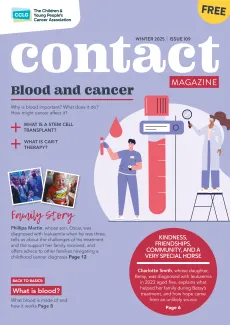
The human body relies on blood to perform many functions for it to operate as it should do. But cancer and its treatments can affect the blood in many ways. In this edition of Contact, we find out how cancer and its treatment may affect a person's blood and how doctors tackle this.
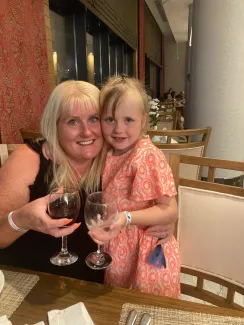
Kelly Herriott’s daughter, Evie, was diagnosed with neuroblastoma in 2020 when she was 21 months old. Here, Kelly explains how Evie’s treatment affected her blood, offers advice to others facing a childhood cancer diagnosis, and tells us what life looks like for their family now.
Two years ago, Wilf’s biggest dream was survival.