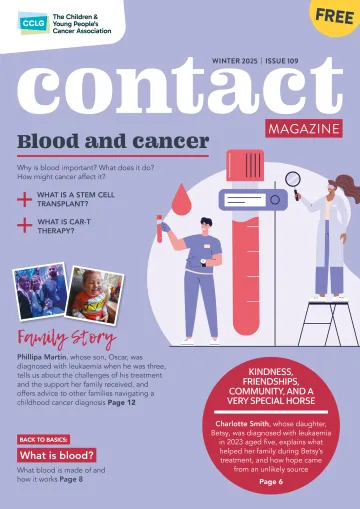
Front cover of Contact magazine, issue 109, themed ‘Blood and cancer.’ The purple cover features an illustration of scientists and researchers examining a vial of blood.

Blood and cancer

The human body relies on blood to perform many functions for it to operate as it should do. But cancer and its treatments can affect the blood in many ways. In this edition of Contact, we find out how cancer and its treatment may affect a person's blood and how doctors tackle this.

Download this issue
  • Why is blood important? What does it do? How might cancer affect it?

The human body relies on blood to perform many functions for it to operate as it should do. But cancer and its treatments can affect the blood in many ways, especially when it involves blood cancers like leukaemia and lymphoma. These cancer types disrupt the normal production and function of blood cells, which are vital for immunity, oxygen transport and clotting. 

Some treatments for cancer can also increase the risk of infection and blood clots and interfere with the body’s ability to control bleeding. In this edition of Contact, we find out how doctors tackle this for children and young people affected in this way, and speak to healthcare professionals to offer insight into various procedures and therapies, both established and emerging, that are offering hope for children and young people with cancer.

Despite treatment and care continuing to improve, children and young people with cancer and their families still face a huge number of challenges and complications. That’s why hearing the experiences of those who have walked this path before, and what helped them, is so important. We're grateful to all those who have shared their advice within these pages.
Articles from this issue

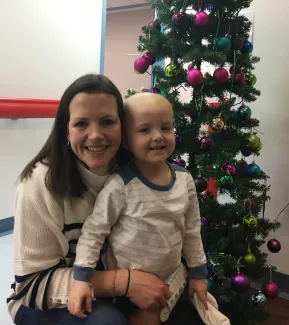
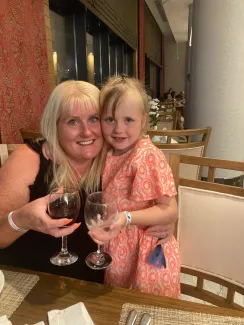
A mother and young daughter sit closely at a dinner table, arms around each other, smiling and holding drinks.

The importance of platelet transfusions in childhood cancer

Kelly Herriott’s daughter, Evie, was diagnosed with neuroblastoma in 2020 when she was 21 months old. Here, Kelly explains how Evie’s treatment affected her blood, offers advice to others facing a childhood cancer diagnosis, and tells us what life looks like for their family now.

What is CAR-T therapy?

Sophia Landell-Wright, TYA Bone Marrow Transplant and CAR-T Clinical Nurse Specialist at University College London Hospital NHS Trust, explains CAR-T therapy.

60 seconds with Dr John Moppett

60 Seconds with Dr John Moppett, Paediatric Haematologist at Bristol Royal Hospital for Children and CCLG member.

How we used creativity to help us through treatment

Amanda Richards’ daughter, Seirian, was seven years old when she was diagnosed with leukaemia in 2022. Here, Amanda explains how arts and crafts helped them navigate the challenges of treatment and tells us about a special art exhibition showcasing their work.

Why lived experience is vital to developing research

Kate Willis’ son, Sebby, was two years old when he was diagnosed with acute lymphoblastic leukaemia in 2017. Kate tells us about Sebby’s treatment, how this influenced her to help shape research, and the importance of patient and parent voices in research discussions.

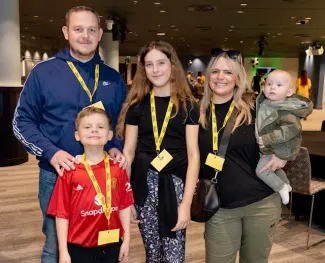
A family of five, including a dad, mum, young daughter, little boy, and baby, standing together wearing yellow lanyards.

“Take each day as it comes”

Samantha Hall's son, Jackson, was diagnosed with T-cell acute lymphoblastic leukaemia aged two in 2020. She describes the impact this had, what life looks like now, and offers advice to others navigating treatment.

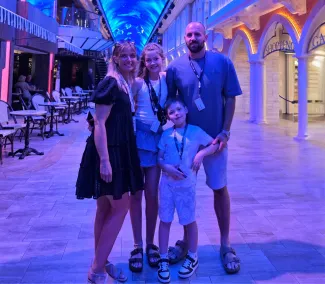
A family of four, including a mum, dad, daughter, and son, standing together for a photo.

Navigating the challenges and impact of our son’s leukaemia journey

Philippa Martin’s son, Oscar, was diagnosed with acute lymphoblastic leukaemia when he was three years old in 2022. Here, Philippa tells us about the challenges of treatment and the support her family received, and offers advice to other families navigating a childhood cancer diagnosis.

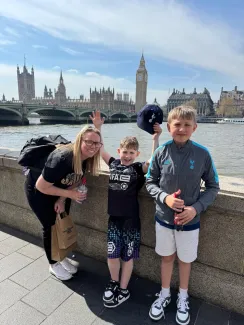
A mum and her two sons standing together with Big Ben visible behind them.

How our experiences are driving us to help other families

Laura Sheppard’s son, Max, was seven years old when diagnosed with acute lymphoblastic leukaemia (ALL) in May 2023. Here, she tells us about his treatment, the support they received during it, and why her family now wants to make a difference to others.

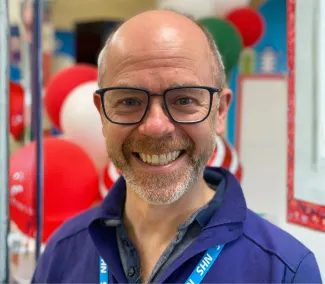
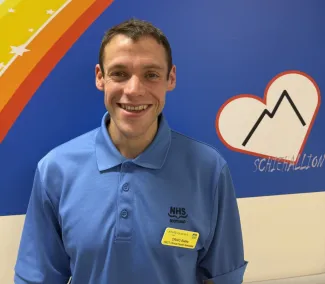
A man in a blue NHS Scotland uniform smiling at the camera.

What is a stem cell transplant?

Craig Baillie is a stem cell transplant clinical nurse specialist at Royal Hospital for Children in Glasgow. Here, he explains what a stem cell transplant is, the different types, and the process of receiving one.

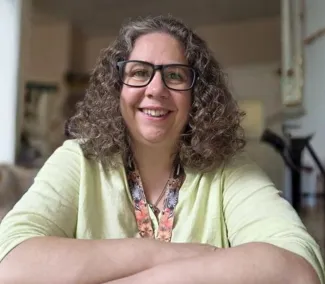
A woman with curly brown hair, glasses, and a yellow top sits with her arms crossed, smiling at the camera.

What is blood?

Blood is vital for the body to function properly. Dr Emmy Dickens, a consultant paediatric haematologist at Addenbrookes Hospital, explains what blood is and why it’s important.

Front cover of Contact magazine, issue 109, themed ‘Blood and cancer.’ The purple cover features an illustration of scientists and researchers examining a vial of blood.

Subscribe to our free quarterly magazine for families of children and young people with cancer

Subscribe to receive our latest quarterly Contact Magazine.

Front cover of Contact magazine, issue 109, themed ‘Blood and cancer.’ The purple cover features an illustration of scientists and researchers examining a vial of blood.

Sign up to receive our newsletter

  • * indicates required

    You can unsubscribe at any time by clicking the link in the footer of our emails. For information about our privacy practices, read our privacy policy.


    We use Mailchimp as our marketing platform. By subscribing, you acknowledge that your information will be transferred to Mailchimp for processing. Learn more about Mailchimp's privacy practices.