
Led by emeritus Professor Kathy Pritchard-Jones, the project is one of over 200 research projects funded by The Little Princess Trust (LPT) and administered by CCLG: The Children & Young People’s Cancer Association. We work with the LPT to fund research, using our expertise to help select the most impactful research projects and administer their extensive research programme.
The project analysed 17 years of data from over 1,000 children with Wilms tumour, looking at whether hospital size and adherence to the nationally recommended standard of care affected children’s survival.
Wilms tumour patients are treated at one of 20 specialist centres in the UK and Ireland, which vary from treating fewer than five children per year to over thirteen. The researchers found that there was no difference in the percentage of children treated with the recommended standard of care between differently sized centres.
Prof Pritchard-Jones, from the UCL Great Ormond Street Institute of Child Health, explained:
There's evidence in many adult cancers that patients treated at centres which see larger numbers of that disease have better patient outcomes. We wanted to investigate whether this happens in childhood cancer and if treatment received varied from nationally recommended guidelines.
The research team found that children whose treatment took place at smaller centres were just as likely to survive as those treated at the larger centres. In addition, children whose treatment differed from the recommended standard of care did not have a lower chance of survival.
"Our conclusion,” Prof Pritchard-Jones added, “was that the setup, expert networks and national guidelines we have in the UK and Ireland are very effective for delivering safe and standardised care for Wilms tumour.”
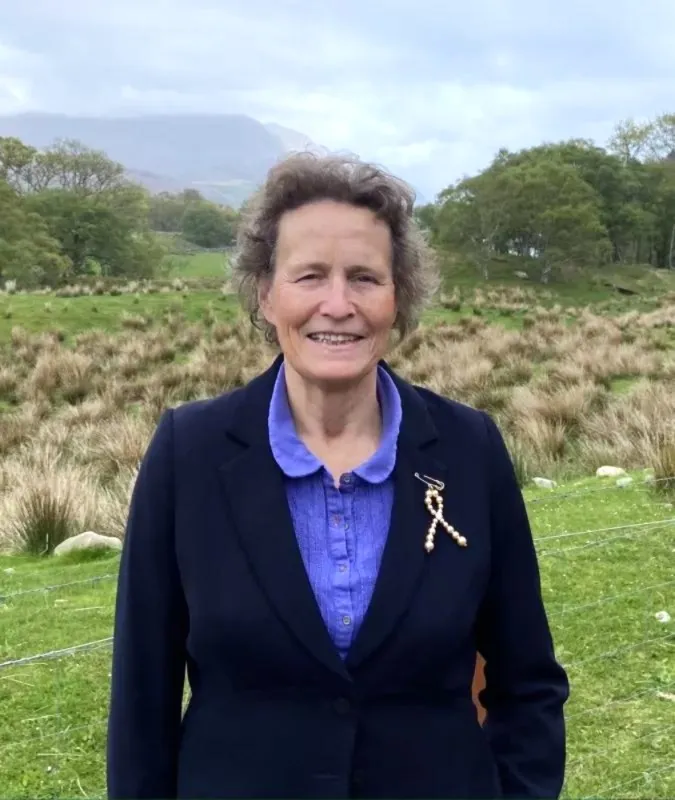
Professor Kathy Pritchard-Jones
The analysis of clinical trial databases also showed that higher tumour stages and more difficult risk groups were the main reason for variation from the standard of care as children with bigger and more complex tumours were more likely to need a more individual approach to their treatment.
Prof Pritchard-Jones added: "Some children’s clinical cases are more complicated, or they don’t respond to treatment as expected, so it should be reassuring for parents that variations in treatment, if present, are explainable and do not affect the overall chance of survival.”
While these findings are positive, there is still a clear need for improvement for more complex cases or more advanced tumours. Current treatments are harsh, often having long-term side effects, and around one in 10 children with Wilms tumour cannot be cured.
Wendy Tarplee-Morris experienced this devastating reality when her five-year-old daughter Hannah Tarplee died in 2005, after enduring “brutal” treatments for her Wilms tumour that could not save her.
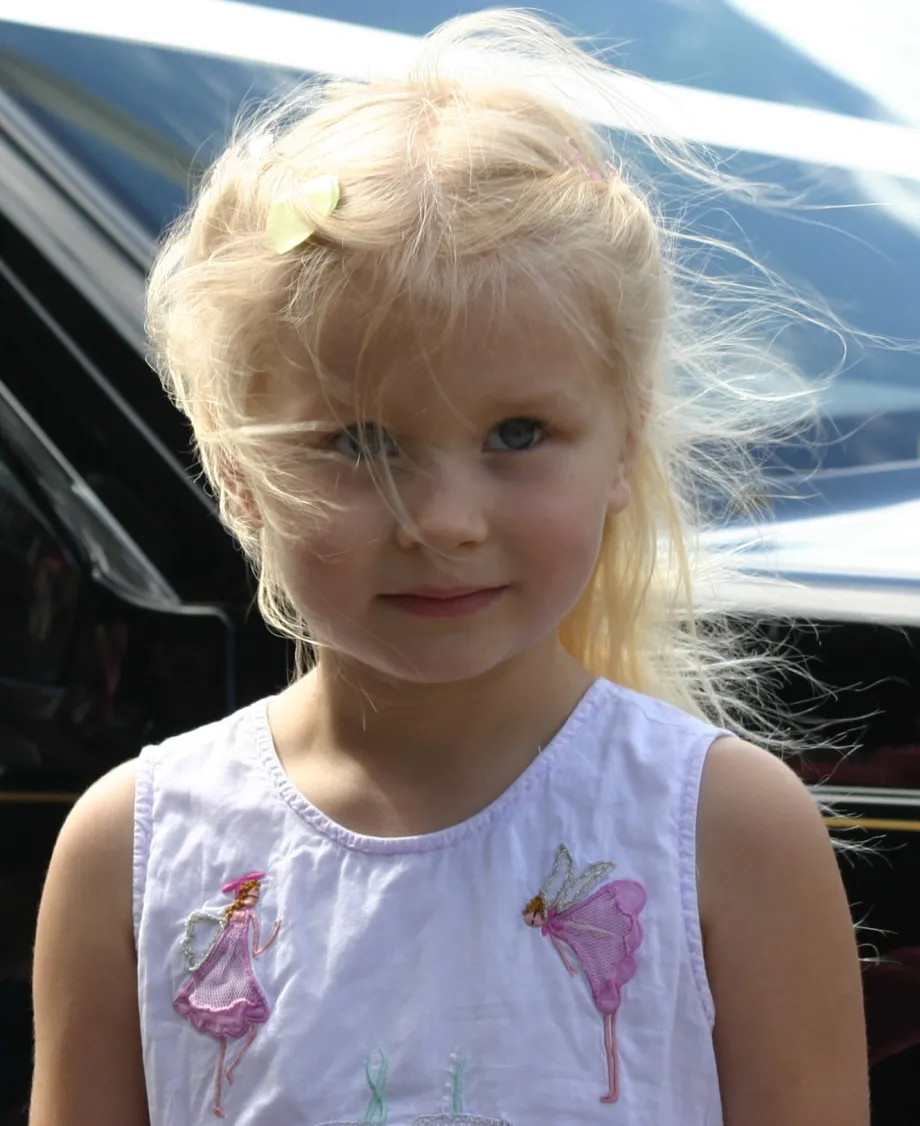
Hannah Tarplee
"Hannah was a very healthy child, until we discovered the lump in her tummy," Wendy said. "The treatment she needed made her unrecognisable in every way. We saw first-hand the devastating effects of the current treatments – and ultimately, they didn't save her life."
Hannah’s experience drove her family and friends to establish The Little Princess Trust (LPT) in 2005. The charity began by providing wigs to children experiencing hair loss from chemotherapy and now also funds research into all types of childhood cancer.
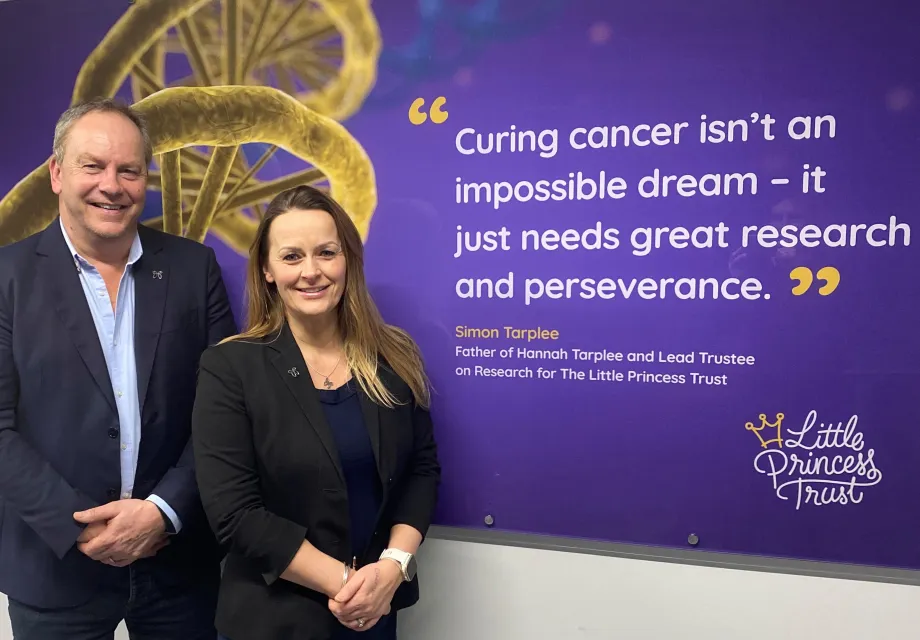
Wendy Tarplee-Morris and Phil Brace, CEO of the LPT.
The LPT has played a key role in supporting Professor Pritchard-Jones’ work, funding this study and several others.
Wendy emphasised the importance of investing in research: “Whilst we welcome the reassuring findings from this study, it’s vital to support ongoing research that makes treatments more effective and potentially safer. Without research, often funded by charities like The Little Princess Trust, progress simply can’t happen.
We know that families can't just wait for things to get better; current treatments are extremely toxic, and some childhood cancers still have extremely poor survival rates. That's not acceptable - how could we not want to change that?
Sarah Evans, CCLG Head of Research, added: "This research shows the real strength of a childhood cancer care system that is rooted in collaboration, with experts working together to ensure the best treatment for every child.
"We’re proud to work alongside charities like The Little Princess Trust to enable research like this, helping us understand more about the strengths of our current care - and highlighting areas where more work is needed. Looking forwards, we need to not only maintain these high standards of care, but also to push for the earlier diagnoses and kinder treatments that will ensure that even more children with kidney cancer survive."