I first noticed something was wrong when I started experiencing mild symptoms of a urinary tract infection (UTI). These included an unusual smell and a slight pulling sensation on my right side, but nothing severe.
I had polycystic ovary syndrome like symptoms that led to a misdiagnosis. These included excessive facial hair, a deeper voice, irregular or no periods, decreased breast size, and hormonal imbalance. I now know that these are common symptoms of Sertoli-Leydig cell ovarian cancer.
Diagnosis
The year of my diagnosis, my partner had been in and out of hospital with his own health struggles, so we had already had to cancel our summer holiday several times. When we booked it again, we chose a date later in the year in November.
On the week we were due to fly, I started experiencing mild UTI-like symptoms. I didn’t want to risk the holiday being affected again, so I went to see my GP, expecting to leave with antibiotics and go on my way. However, after my UTI tests came back clear, the GP – who ultimately saved my life – examined my stomach and felt a large mass.
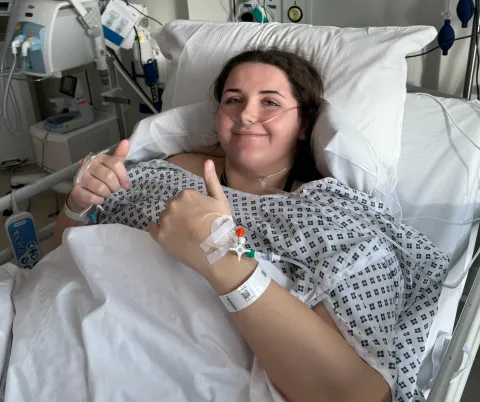
I was admitted to hospital for five nights for a series of tests. Despite all the investigations, no one could figure out what it was. At first, they thought it was a harmless ovarian cyst, but then it was described as a tumour, though they still couldn’t identify the type. It was something that none of the doctors had seen before.
I was referred to University College London Hospital (UCLH) to see a specialist because they suspected it might be a sarcoma. I had a biopsy there, which showed suspicious cells but still didn’t give a clear diagnosis. Because of that, they decided to proceed with surgery to get a definitive diagnosis. After the surgery, they discovered aggressive cells, so I started treatment very soon afterwards.
I was diagnosed with a rare type of ovarian cancer called Sertoli-Leydig, and had surgery to remove my right ovary, my fallopian tube, and a 23 cm tumour, followed by chemotherapy. I was later diagnosed with a genetic disorder called DICER1 syndrome, which makes me more prone to developing ovarian and thyroid tumours, something I’d never heard of before.
Challenges of treatment
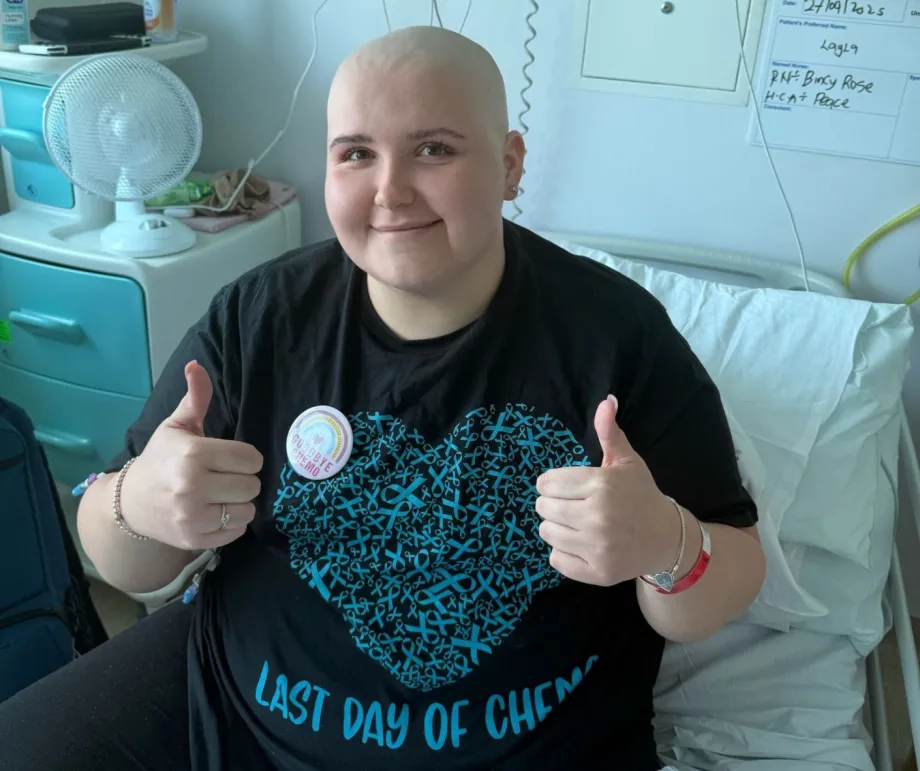
My biggest challenge was my final round of treatment. By then, my entire body had had enough. Nobody told me or warned me about many of the side effects of treatment, and that was what I struggled with most. I’d prepared myself for the ‘common’ side effects, like hair loss and sickness, but I hadn’t prepared myself for the possibility of losing my fertility, the heightened sense of smell from my skin and urine, or the chronic weakness and fatigue.
I also found it incredibly difficult watching my friends carry on with their lives and seeing other young people my age doing the things I used to love, while I was in hospital fighting for my life. As a young person, I had never really considered the possibility of serious health problems, so it hit me much harder than I had expected.
The impact of cancer as a teenager or young adult
Being diagnosed with a gynaecological cancer in your young adult years comes with its own unique challenges – fertility being one of the biggest. My fertility was significantly affected when I lost an ovary. My treatment also carried a high risk of damaging or destroying my remaining ovary, as well as affecting egg quality, which has left my future fertility uncertain.
Losing my hair was also incredibly difficult to navigate as a young woman in my twenties, especially when social expectations can already make confidence feel fragile. Facing that on top of everything else was overwhelming.
Life after cancer
Since June 2025, I have officially been in remission with no evidence of disease, and I have scans every three months.
Life after cancer is bittersweet. For me, it’s about balancing gratitude for a second chance at life with grieving the life I had before. Cancer will always be a part of me now, and that’s a hard truth to come to terms with.
At the same time, my new perspective on life is beautiful. I feel more content than I ever have before. The smallest things feel massive, the silly things no longer seem important, and, most importantly, time feels precious.
Before cancer, I took so much for granted. It’s not until you experience a cancer diagnosis at a young age that everything is put into perspective, and suddenly, nothing seems quite as serious anymore. Now, I live life to the fullest and I live for me, doing what makes me happy, because when I was sitting on a chemo ward fighting for my life, I could only have dreamed that life would look like this again.
Advocating for young people
I think it’s so important that young people are listened to, especially when it comes to cancer care. I was lucky to be taken seriously the first time I visited my GP, but after hearing other young people’s experiences, I know that unfortunately this isn’t always the case. It’s worrying to think that this happens so often. There needs to be more awareness so that young people aren’t misdiagnosed or left with delayed diagnoses, and so that care and outcomes can be improved.
Young people can sometimes be underestimated, but we know our bodies better than anyone. Just because we’re young, it doesn’t mean we lack the knowledge or maturity to understand when something isn’t right with our health.
Why I want to raise awareness
Being diagnosed with cancer at a young age comes with additional challenges. It can feel incredibly isolating, as though you’re completely alone, when in reality there are so many people who have been in your shoes and truly understand what you’re going through. I searched for other young people as soon as I was diagnosed, and connecting with them has been one of the biggest sources of support throughout my journey.
It’s so important to raise awareness of cancer in children and young people because it can often be misunderstood, misdiagnosed, or not taken seriously enough. I was diagnosed with a very rare type of ovarian cancer, which accounts for only 0.5% of ovarian tumours, so there’s very little awareness of it and that’s something that needs to change.