I first realised something was wrong at the end of 2021, when I started feeling unwell frequently and losing a lot of weight without trying. I went to my GP several times, and blood tests kept showing a deficiency in folic acid, even though I was taking a prescribed tablet every day.
In July 2022, I became very concerned about how I was feeling and made another appointment to see my GP. I told them about my six-stone weight loss (I was then around seven stone), how exhausted I was, and that I’d been being sick every day with no obvious cause.
My GP told me, “You look healthy, so everything is fine.” When I was dismissed by multiple GP’s, it made me feel belittled, discouraged and frustrated. I knew I was ill, and I knew that the symptoms I had were not normal, but they made me question my own thoughts and feelings to the point that I disregarded the first physical sign of cancer for months before going back to them.
I didn’t go back to the doctors until December 2022, and only then because a lump had started forming in my underarm – and, this time, I was taken seriously.
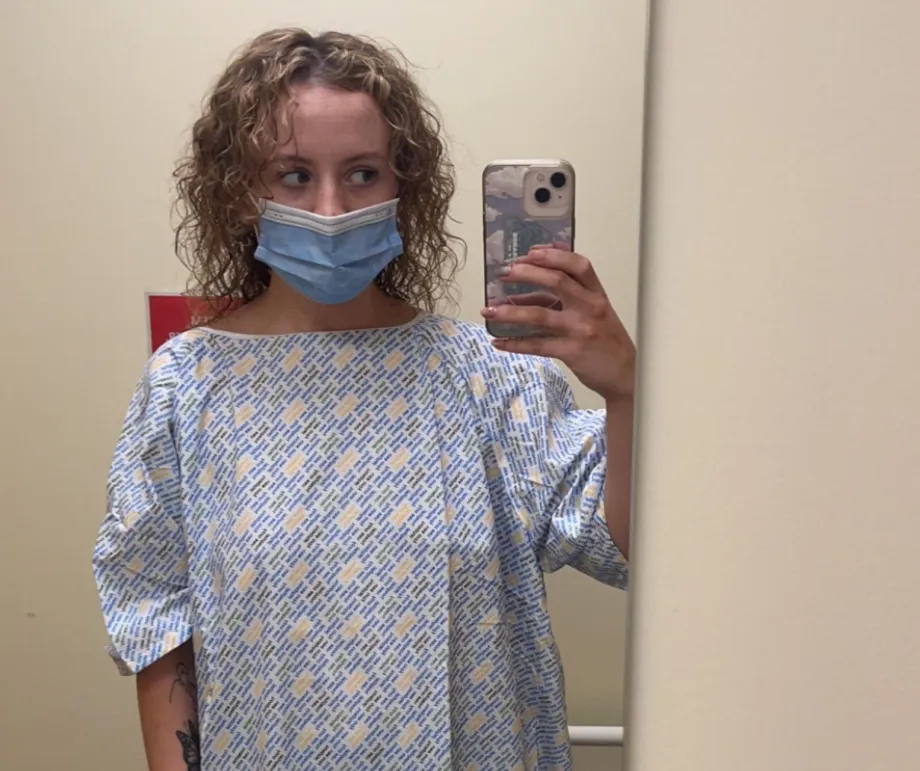
Abby prepped for biopsy
Diagnosis
My GP referred me for an ultrasound, which took place in January 2023. During the appointment, doctors took biopsies and told me it was most likely lymphoma, but that I would receive my results soon. When I hadn’t heard back, I had to call the hospital, to be told that the biopsies were unusable due to a processing error and that I would need to go back for more.
I was officially diagnosed with high-grade non-Hodgkin lymphoma on 30 January 2023. Being told this felt weirdly vindicating and almost a relief, as it felt like confirmation that I wasn't making things up. I think that receiving the full diagnosis helped me a bit because I knew what I was up against and could start trying to process what was coming ahead and how to deal with it.
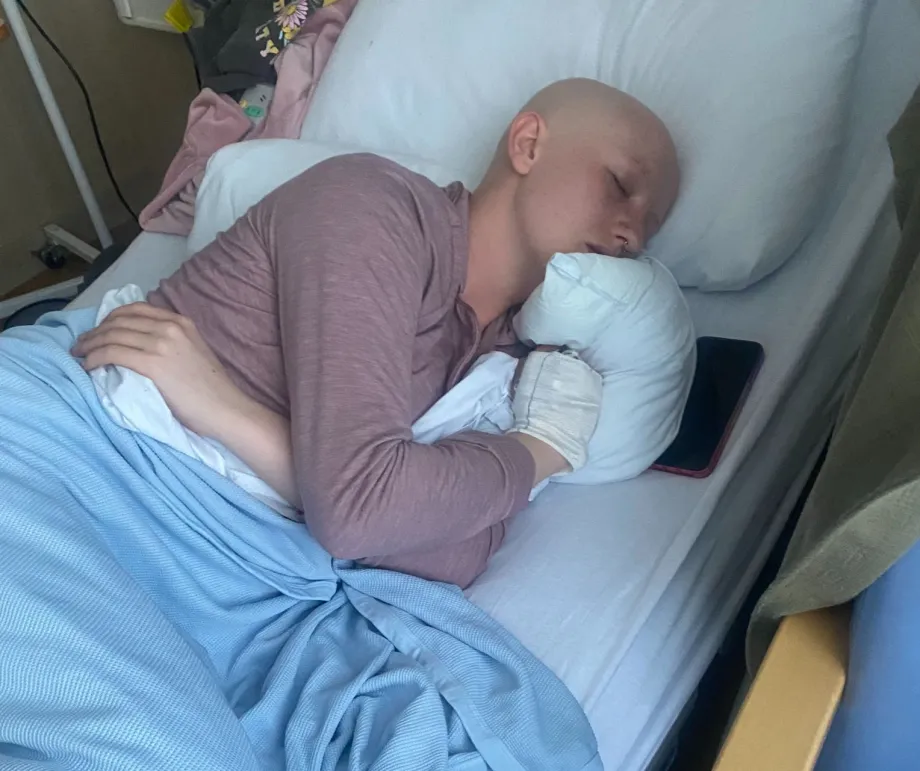
Abby during treatment
Treatment
My treatment began on 10 March 2023 with six rounds of chemotherapy. Before treatment, my biggest concern was losing my hair, but this changed completely once I started chemotherapy. The nausea and sickness were the hardest part of my experience. It really was debilitating. I still deal with significant anxiety related to this, but I found ways to cope, including using essential oils and massage to help manage stress, nausea, and anxious feelings.
I had to stay at University Hospital Hairmyres due to constant sickness before being admitted as an inpatient at Beatson West of Scotland Cancer Centre, where my care was exceptional. Though my treatment affected my energy levels and I was feeling sick for so much of the time, I did my best to try to still enjoy life where possible and do as much as I could. I still went to concerts, and I still went out with my friends and even went to college throughout my treatment. There was always a risk of infection, but I thought it was important to do as much ‘normal’ things as I could, when I was feeling well enough and not in hospital.
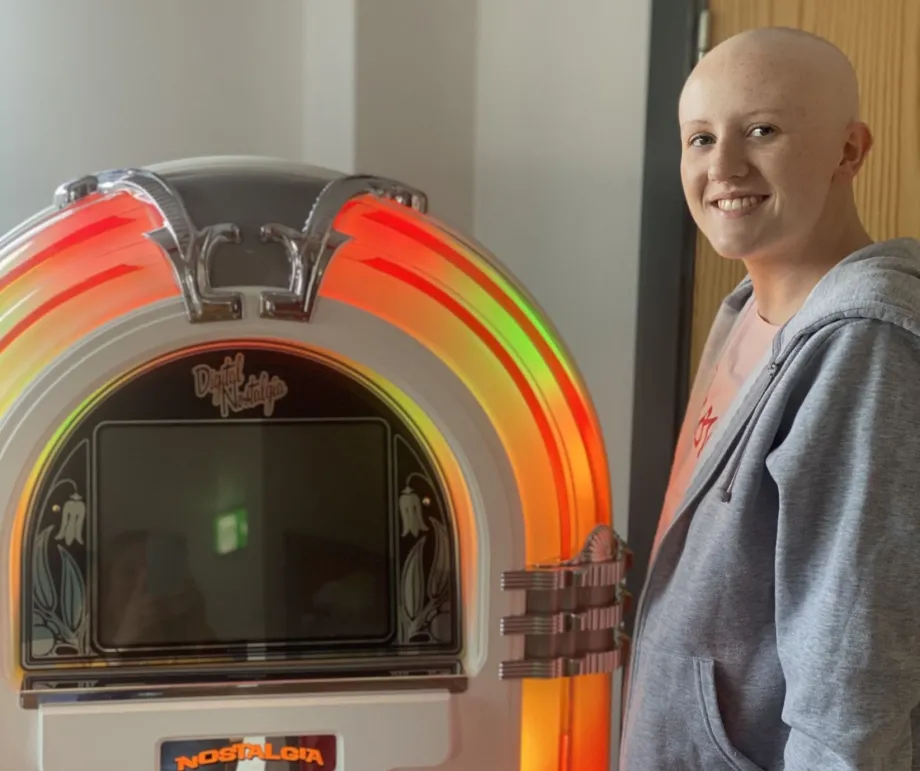
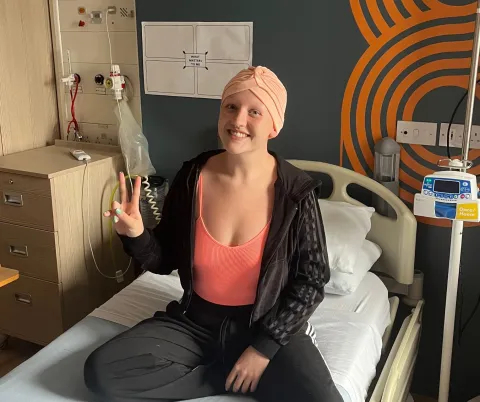
Abby in hospital
The support from my friends and family, particularly my mum, Karen, and my now fiancé, Liam, was also so important. They did absolutely everything for me and I couldn't have got through it without them. Mum stayed with me in the hospital every time I was in there, and it was really good to have her with me.
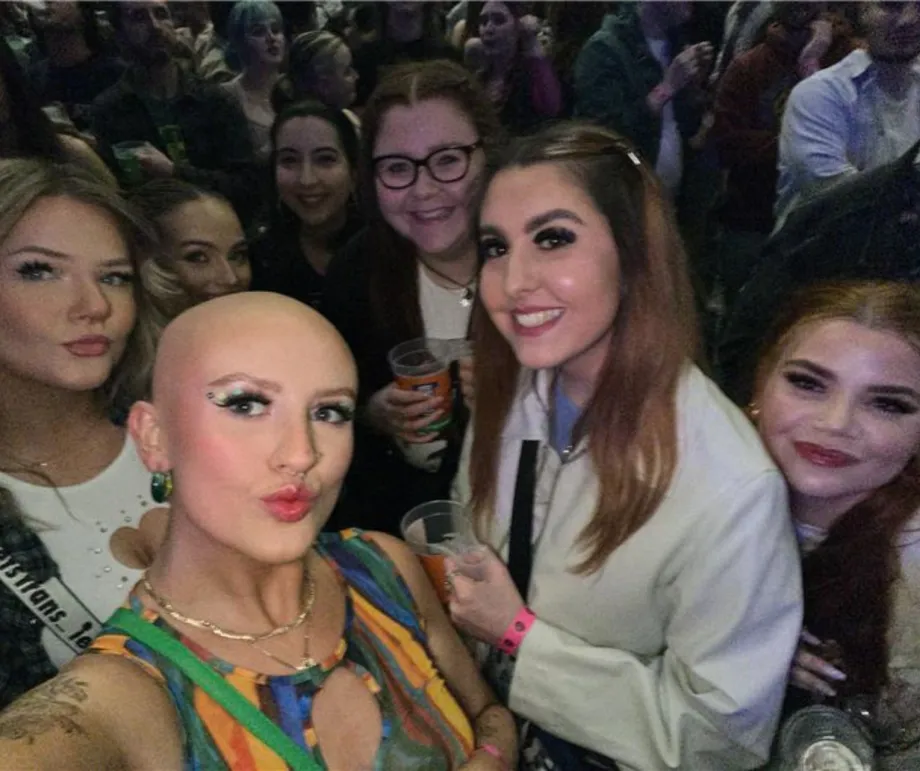
Abby at a gig with friends
I was offered the use of the hospital's psychology services and peer support programmes throughout my treatment, but it wasn’t something I wanted to do at the time. The medical team were always great at checking in with me to see if I’d changed my mind, but I just wanted to concentrate on getting through treatment. This won’t be the same for everyone, and choosing your own path is really important because it gives you a little bit of control at a time when you don’t have much of it.
However, since finishing treatment, I’ve really benefited from these services. It’s been a Godsend to meet other young people who have been through cancer, and mostly, we just talk about normal young people things.
Trusted information resources are so important for young people with cancer
To me, one of the most important aspects of support for a young person diagnosed with cancer is having trusted information resources that you can refer to and can help you make sense of your diagnosis and treatment, and even post-treatment.
I definitely did it the wrong way. The first thing I did after being told I had suspected lymphoma was google stuff, which multiplied my anxiety by a hundred. I saw all the worst things, whereas with information from charities like CCLG, you're getting well-rounded, trusted support and information rather than all the bad stories that you can find by searching online.
The impact of cancer on a young person
Raising awareness of the signs and symptoms of cancer in young people is incredibly important to me because we’re so often disregarded, as we’re assumed to be healthy and fit. There’s still a lack of understanding and awareness that cancer affects young people too, and it affects everyone differently.
And cancer doesn't end when you get the all-clear. Even when we’re in remission, we can be affected by cancer for years afterwards. It often disrupts education, the start of careers, and finances, and can cause long-term effects such as mental health challenges, body image concerns, chronic fatigue and fertility issues, to name just a few. It’s only when treatment ends that you start coming to terms with what’s happened to you and the psychological effects are more prominent. That’s where that support becomes so important.
I think there needs to be a certain level of compassion for young people that have been through cancer, and hopefully by myself and others talking about it, the public’s understanding of this will be better.
How a podcast has helped me
I’ve been involved with the Radiotherapy Podcast since its first season. The podcast brings together teenage and young adult cancer survivors to talk about their experiences, and this has also really helped in processing my experiences. It was the first example of peer support I’d taken part in, and after that I started going to more peer support events. It’s also given me a real boost of confidence. The thought of thousands of people listening to my voice would have terrified me before cancer, but not anymore.
I’m now working behind the scenes, too, helping to come up with and gather ideas about what we want to talk about. In the second series, we were able to bring on our parents and partners, so we’ve been able to get a lot of different perspectives involved, which has been great.
What life looks like now
I’m two-and-a-half-years cancer-free, and life feels well balanced right now. I still experience high levels of anxiety, particularly around my health, and I received some difficult news about my fertility last year. However, cancer has made me a more resilient person, and I now know I’m capable of so much.
I’m now engaged to Liam, my partner of nine years, and I’ve begun a new career as a complementary therapist. I am nearing the end of my HND course and have been accepted to university to study Integrative Healthcare. I also volunteer as a complementary therapist for Marie Curie Hospice and with Look Good Feel Better, where I provide skincare and make-up classes for people affected by cancer.
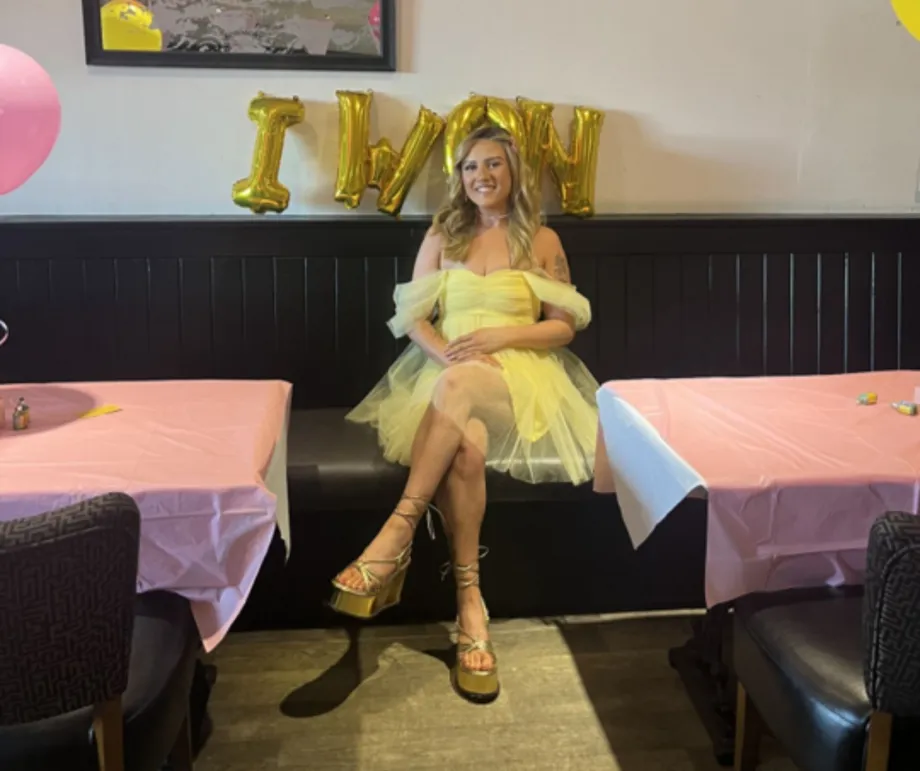
Abby celebrating being cancer free
My advice to other young people
You know your own body better than anyone. If something doesn’t feel right, continue to advocate for yourself. It can be exhausting and repetitive, but it’s so important to ensure you receive the treatment and care you need.