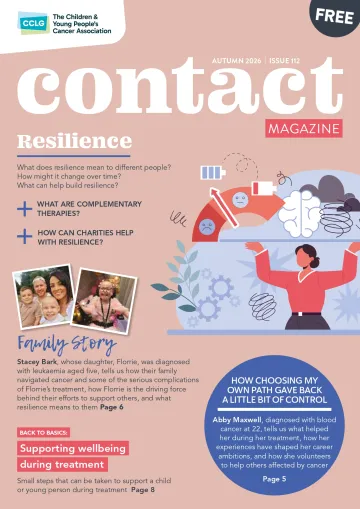
What is resilience?
Resilience is the ability to adapt or respond to difficulty. This will look different for different people. It might be about acknowledging how hard and scary cancer is yet being determined to overcome it. Or continuing with treatment even when it’s making you feel worse. Or it could be offering emotional support to your child even when you’re frightened yourself.
What if I don't have a choice?
Some people don’t like the word resilience because they don’t get to choose to be resilient. Sometimes people are described by those around them as resilient when they’re simply doing what they need to do to survive a difficult experience, like turning up for treatment every day. If this is how you feel, that’s okay. Resilience is not about pretending those more difficult emotions don’t exist. It’s perfectly normal to feel angry, worried, frightened, resentful, or sad. We don’t get to choose how we feel. But we might be able to think about how we can manage some of those emotions so that they don’t control us. What we do get to choose is what we can do to make tiny moments of our day, that little bit brighter, even if they only last a short while.
How can I cope with the demands of treatment?
Focus on what matters to you
Treatment can be long, painful and relentless and sometimes can even lead you to question things about your old life. Try and think about things that were important to you before you, as a child or young person, or your child if you’re a parent, started treatment. What qualities do you hope other people value in you? This could be authenticity, humour, honesty, kindness. These are things that make you, you.
Connect with others
Spending time with people who make you feel good, has heaps of benefits. But it's also okay to give yourself permission not to force contact with the people who don’t do this! If you find that people are asking you lots of questions that you can’t answer, see if somebody else can talk to them instead. Prioritise the relationships that feel easy. Consider what support you need from other people and let them know.
Notice what’s around you
It’s perfectly normal for difficult thoughts or worries to be racing around your head. When this happens, it can be helpful to focus on the present moment. What can you see? What can you hear? What can you feel? What can you smell? What can you taste? If you’re able, try this outside – can you hear the birds? Smell any flowers? Touch the grass? This is one small example of how mindfulness can bring us back to the present moment. The more you practice mindful behaviours when you feel okay, the easier they will be to use when you don’t.
Look after your body
If you’re a child or young person going through treatment, looking after your body can feel difficult especially if you’re experiencing gruelling side effects from treatment. While you may not be able to do much physical activity, are there things you can do? Try your best to follow the advice of professionals like doctors and physiotherapists, but don’t be too hard on yourself if you struggle with some areas. There are lots of people around you who can help. If you’re a parent or carer of a child or young person with cancer, remember that looking after yourself isn’t selfish, it’s essential – you can’t pour from an empty cup.